Can coconut milk be exported abroad?
Can coconut milk be exported abroad? Exported coconut milk is a coconut milk product produced in Vietnam or other coconut growing countries, but packaged and processed according to international standards to serve foreign markets. This type of milk is often processed with strict procedures, ensuring food hygiene and safety, consistent quality and long shelf life, meeting the import standards of each country such as FDA (USA), EU, ISO or HACCP.
.png)
Advantages of exporting coconut milk to foreign countries
Coconut milk is one of the typical agricultural products of Vietnam, widely used in traditional dishes such as sweet soup, sticky rice, cakes and rich desserts. When exported to international markets, coconut milk brings many outstanding benefits not only to businesses but also contributes to promoting Vietnamese cuisine to the world.
Expanding consumption markets and increasing revenue
Exporting coconut milk helps businesses access international markets with high consumption demand, especially the US, EU, Japan, Korea and Middle Eastern countries. Foreign markets often have higher value than domestic markets, helping businesses increase revenue, improve profits and develop stable business. Exporting also helps reduce inventory pressure for coconut milk production facilities, especially during large coconut harvest seasons.
Affirming brand and product reputation
Exported coconut milk products must meet international standards on quality, food hygiene and safety and packaging. When passing these strict inspections, businesses not only enhance their reputation but also affirm their brand in the international market. Foreign customers highly appreciate products with ISO, HACCP, FDA or EU certification, helping to build long-term trust and pave the way for other coconut products such as coconut oil, coconut cream or coconut candy for export.
Diversify products and business forms
Export opens up opportunities to diversify coconut milk products. The product can be processed in many forms: fresh milk, concentrated milk, canned milk, frozen or coconut cream. This makes it easy for businesses to customize according to the needs of each market, meeting the preferences and quality standards of international customers. At the same time, providing a variety of products helps increase added value and competitive advantage in the market.
Increase economic value for agricultural products and farmers
Exporting coconut milk brings higher economic value than domestic consumption. Businesses must buy fresh coconuts with high quality, helping farmers have a more stable income and improve the quality of coconut raw materials. This promotes sustainable agricultural development, encourages clean coconut production and modern coconut processing industry.
Promoting Vietnamese cuisine to the international market
Exporting coconut milk not only brings economic benefits but also promotes Vietnamese cuisine to the world. When coconut milk is used in traditional Vietnamese dishes abroad, international consumers have the opportunity to experience the unique flavor, helping to enhance the recognition and position of Vietnamese cuisine.
Supporting businesses to access international standards
To export coconut milk, businesses are required to apply international standard production processes, from raw material selection, processing, packaging to preservation and transportation. This helps improve the quality of domestic products, while creating a competitive advantage when products are strictly and stably controlled for quality.
.png)
Can coconut milk be exported abroad?
Coconut milk is one of the typical agricultural products of Vietnam and many other coconut-growing countries, playing an important role in East Asian cuisine, especially desserts, sticky rice, cakes and dishes made from coconut. With the increasing demand for international cuisine, coconut milk can be completely exported abroad, as long as it meets the standards of quality, food safety and import regulations of each country.
Standards for exporting coconut milk abroad
Coconut milk is a typical agricultural product of Vietnam, popular in many international markets such as the US, EU, Japan, Korea and Middle Eastern countries. However, to be allowed to be exported, coconut milk must fully meet international standards of quality, hygiene and food safety, to ensure that the product has stable quality and is safe when it reaches foreign consumers.
Raw material quality standards
Raw material quality is the most important factor. Exported coconut milk must be extracted from fresh coconuts, firm coconut meat, low fiber and not damaged, ensuring natural aroma and uniform fat content. Some specific requirements:
Fat content: Coconut milk must have a certain fat content, usually 18-22% for the popular export type.
Color and taste: Must be pure white, free of impurities, natural coconut aroma, not fermented or sour.
Impurity content: Does not contain soil, sand, coconut shell pieces or other impurities.
Food hygiene and safety standards
International markets are very strict about food hygiene and safety, so exported coconut milk must:
Not contain harmful bacteria and mold: The product must undergo microbiological testing before packaging.
Not contain heavy metals: Such as lead, mercury, cadmium... exceeding the allowable limit.
Preservative and chemical limits: Only use permitted preservatives and within the limits allowed by international standards.
Certifications commonly required include HACCP, ISO 22000, FDA (USA), EU, or other international food hygiene certifications.
Production and packaging standards
The processing of exported coconut milk must meet international standards, ensuring the product is stable and does not deteriorate:
Sterilization by heat or UHT: Helps extend the shelf life while still retaining the natural flavor and fat.
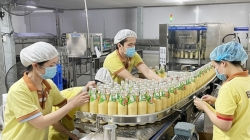
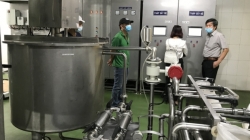
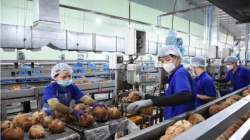
Modern machinery, absolute hygiene: From the process of squeezing the coconut, filtering to packaging, it must be guaranteed to be free of bacteria.
Closed packaging: Use cans, multi-layer paper boxes, food-safe PET bottles or moisture-proof cartons to help protect the coconut milk during long-distance transportation.
Standards for labeling and product information
Each country has its own requirements for imported product labels:
Required information: Product name, manufacturer, production date, expiry date, ingredients, storage instructions.
Label language: Must be printed in English or local language as prescribed.
Origin information: Must clearly state the country of manufacture and export.
Expiry date and storage standards
Expiry date: Exported coconut milk must have a shelf life long enough to be transported, stored and consumed. Usually from 6 months to 1 year if unopened, thanks to UHT sterilization technology.
Storage conditions: Temperature, light, humidity must be strictly controlled to maintain quality. Products need to be transported in a suitable environment to avoid deterioration.
Specific standards for each import market
US: FDA requires hygiene certification, microbiological testing, heavy metals and preservatives.
EU: Requires HACCP standards, clear labels, detailed nutritional information.
Japan, Korea: Very strict quality control, requiring high uniformity, natural color and flavor.
.png)
Why is Vietseafarm a reputable and quality coconut milk exporter?
VietSeafarm is one of the leading coconut milk suppliers in Vietnam, known for its ability to export to many international markets such as the US, EU, Japan, Korea and Middle Eastern countries. VietSeafarm's coconut milk products are highly appreciated for their quality, stability and food safety, helping businesses and consumers feel secure in using them. The raw materials at VietSeafarm are carefully selected from fresh coconuts, firm coconut meat, low fiber, ensuring that the coconut milk has a uniform fat content, color and natural aroma, meeting the strict standards of the international market. VietSeafarm's production process is modern and meets international standards, applying UHT sterilization technology to help prolong the shelf life while still preserving the flavor and nutrients. From the coconut squeezing, milk filtering to packaging, all are done in a clean environment, minimizing the risk of bacterial contamination. Each batch of products is tested for microbiology, heavy metals and fat content to ensure export standards.
VietSeafarm fully meets important international certifications such as HACCP, ISO 22000, FDA and EU, thanks to which VietSeafarm's coconut milk is allowed to circulate and export to many countries without encountering quality or legal obstacles. The product's packaging and packaging are also specially designed for international shipping, including cans, multi-layer paper boxes, food-safe PET bottles or moisture-proof cartons, helping to preserve coconut milk stably and withstand long-distance transportation, ensuring that the product reaches foreign customers while maintaining its quality.
VietSeafarm has many years of export experience, understands the legal requirements, quality standards and preferences of each international customer. At the same time, VietSeafarm provides comprehensive support to customers, from consulting on choosing the right product, instructions on preservation and transportation to providing the necessary certificates for import. VietSeafarm's production scale is enough to meet the needs of households, eateries, restaurants to large export enterprises, ensuring consistent, high-quality and food-safe products. With the advantages of quality raw materials, modern production processes, international certifications and many years of export experience, VietSeafarm is a reputable and reliable address for exporting coconut milk abroad. Businesses and consumers can be completely assured of the quality, safety and stability of the product, while taking advantage of the opportunity to effectively expand the international market, affirming the Vietnamese brand in the global market.
Reference: https://vietseafarm.com.vn/how-long-can-coconut-milk-be-kept-after-opening
Views: 19
 Dec 11, 2025
- 0
 Dec 9, 2025
- 0
 Dec 9, 2025
- 0
 Dec 9, 2025
- 0
 Dec 8, 2025
- 0
 Dec 8, 2025
- 0
 Dec 2, 2025
- 0
 Dec 2, 2025
- 0
 Dec 2, 2025
- 0
 Dec 2, 2025
- 0
 Nov 23, 2025
- 0
 Nov 23, 2025
- 0
 Nov 23, 2025
- 0
 Nov 18, 2025
- 0
 Nov 18, 2025
- 0
.png)
.png)